Kempen Castle
Alongside Zülpich Castle, it's considered the best-preserved 14th-century Electoral Cologne stronghold — with extensive original masonry.
since 1396
The former territorial castle of the Cologne archbishops is regarded, alongside Zülpich Castle, as the best-preserved 14th-century Electoral Cologne stronghold — no other site retains as much original medieval masonry.
At a Glance
- Type
- Former Electoral Cologne territorial castle
- Location
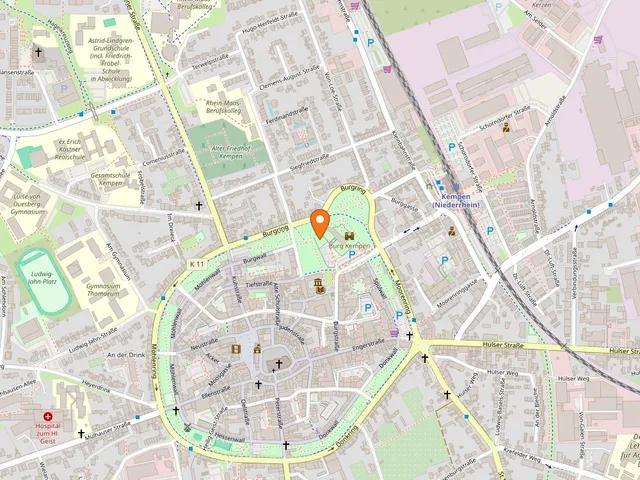
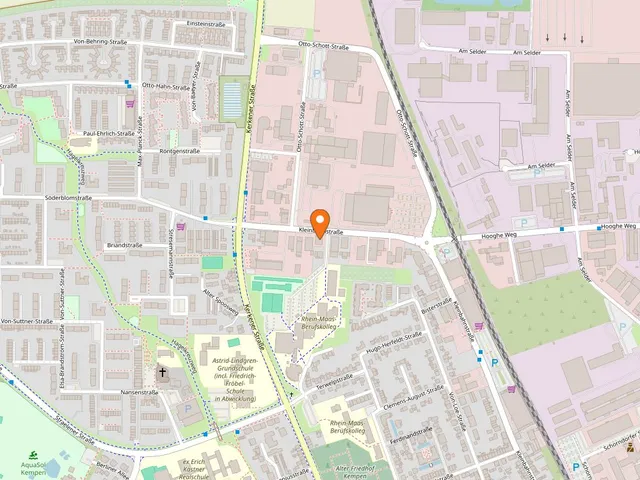
- Northeastern town center of Kempen, Viersen district
- Design
- Two-wing brick building, near-triangular plan, round corner towers
- Origin
- Medieval foundation, exact construction date unknown
- Gatehouse tower
- 20 meters high, pointed-arch design
- Heritage status
- Protected since September 26, 1983
- Visiting
- Interior by appointment, grounds open year-round
Age comparison
Oldest place in this comparison
Age compared with other places in Kempen.
History
After the Battle of Worringen in 1288 made Kempen a strategic bulwark against Jülich and Brabant, Siegfried von Westerburg granted the town city rights in 1294. As a territorial castle, Kempen served the same purpose as the Electoral Cologne strongholds at Linn, Zülpich, Lechenich, Hülchrath, Uda, and Zons, later passing through several pledges to regional lords. Around 1400 Archbishop Friedrich von Saarwerden had it substantially rebuilt by master builder Johann Hundt, following the models of Lechenich and Zülpich — a renovation long misdated to 1316 due to a misread commemorative inscription. Until the French arrived in 1794, the castle housed the town's Schultheiß, doubled as a high court, and held prisoners in its towers.
Architecture
Above a vaulted cellar rise two two-story wings meeting at a right angle, once ringed by a double moat of which only the southern inner section survives. A four-arched stone bridge leads to the pointed gatehouse tower, its stonework still showing the drawbridge's chain holes beneath a double coat of arms naming Friedrich von Saarwerden as builder. Three round corner towers, between 22.5 and 28.5 meters tall, vary in size and detail — the south tower alone has machicolations, while the east tower holds domed chamber rooms, and slender spiral staircases run within the walls throughout.
Renovations and Today
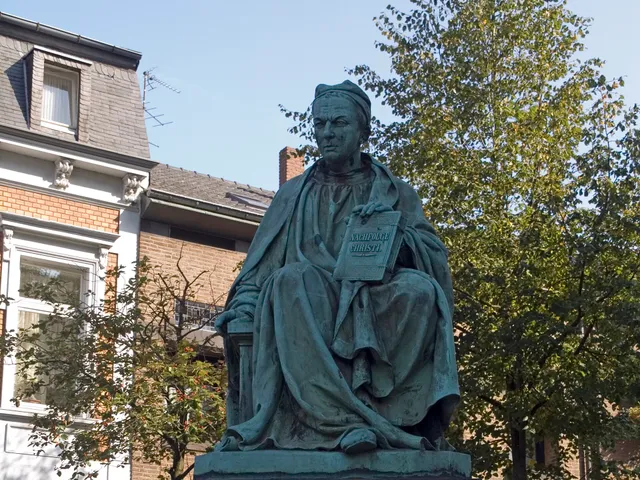
In the 17th century Ferdinand of Bavaria remodeled the castle into a late-Renaissance residence, but a mid-19th-century fire caused severe damage, and the historicist rebuild that followed stripped away its palace-like character, restoring its castle-like appearance. Until August 2022 the building housed the Viersen district archive; today its rooms serve the district's adult education center, while a statue of Thomas à Kempis recalls its long use by the Thomaeum grammar school.
Gallery
Map
Blue dots: other places nearby — tap to explore.
Address
Thomasstraße 20
47906 Kempen
Hours
Mo: 09:00–17:00
Di: 09:00–17:00
Mi: 09:00–17:00
Do: 09:00–17:00
Fr: 09:00–17:00
Sa: 09:00–17:00
So: 09:00–17:00
You might also like — related or nearby
Comments
- Loading comments…
Sources & links
Auto-generated, last verified: 2026-07-06
How this page is made
This page draws on open sources — Wikipedia, Wikidata, official websites and the city’s open data. Every statement is checked against the sources linked here, and pages are refreshed regularly.
Spotted a mistake anyway? Tell us below — we read every submission.