Thomas à Kempis
Monument to the Augustinian canon and author of "The Imitation of Christ," depicted seated with his masterwork in hand, since 1901.
This monument honors Thomas à Kempis, an Augustinian canon, mystic, and spiritual writer of the 15th century, born around 1380 in Kempen.
At a Glance
- Type
- Monument, seated stone figure
- Erected
- 1901
- Artist
- Lambert Piedboeuf
- Material
- two-tiered base of Fichtelgebirge granite, octagonal surround of basalt lava, marble pedestal
- Heritage protection
- listed under reference A_00116
- Connection
- Thomas à Kempis, born c. 1380 in Kempen
The Monument
The figure depicts Thomas à Kempis seated, wearing a richly draped monastic habit, a scholar's cloak, and a cap. In his left hand he holds his principal work, "The Imitation of Christ." The composition combines several types of stone: a two-tiered granite base, an octagonal surround of basalt lava, and a marble pedestal.
Life
Thomas Hemerken was the younger of two sons in the Hemerken family. After attending Latin school in Kempen, he moved to Deventer in 1393, where he spent seven years at the town school. In 1399 he entered the monastery of Agnetenberg near Zwolle, where his brother served as prior. He lived there for 72 years until his death on 25 July 1471. Ordained a priest in 1413, he served for many years as master of novices.
Work
His work with the novices gave rise to several writings. The four-part "Imitation of Christ" (De imitatione Christi) was strongly shaped by this experience; after the Bible, it long stood as the most widely circulated book in the world. Thomas also wrote a biography of Gerard Groote, a chronicle of the Agnetenberg monastery, as well as poems and hymns. He copied out the entire Bible five times by hand.
Legacy
Thomas à Kempis is venerated by both Catholics and Protestant believers. The Protestant calendar of saints commemorates him on 25 July, and he is regarded as the patron saint of Kempen. His remains were exhumed in 1672 and rest in a shrine that was transferred to the Basilica of Our Lady in Zwolle in 2006.
Map
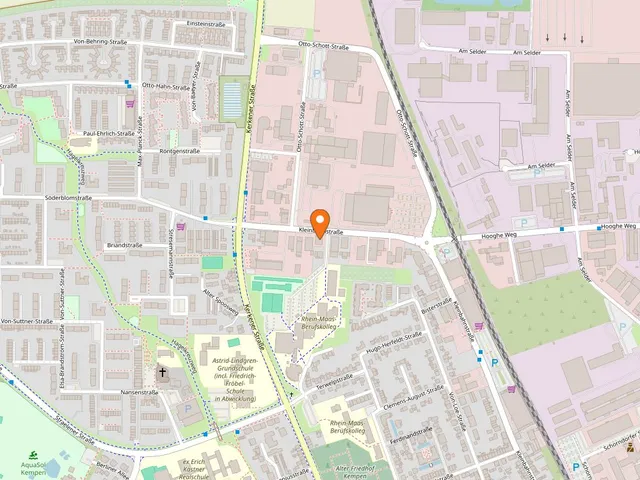
Blue dots: other places nearby — tap to explore.
You might also like — related or nearby
Comments
- Loading comments…
Sources & links
- Official website
- Official website (retrieved 2026-07-16)
- openstreetmap.org (retrieved 2026-07-06)
- Wikipedia (retrieved 2026-07-07)
Auto-generated, last verified: 2026-07-07
How this page is made
This page draws on open sources — Wikipedia, Wikidata, official websites and the city’s open data. Every statement is checked against the sources linked here, and pages are refreshed regularly.
Spotted a mistake anyway? Tell us below — we read every submission.