Monastery Church (former Franciscan Church)
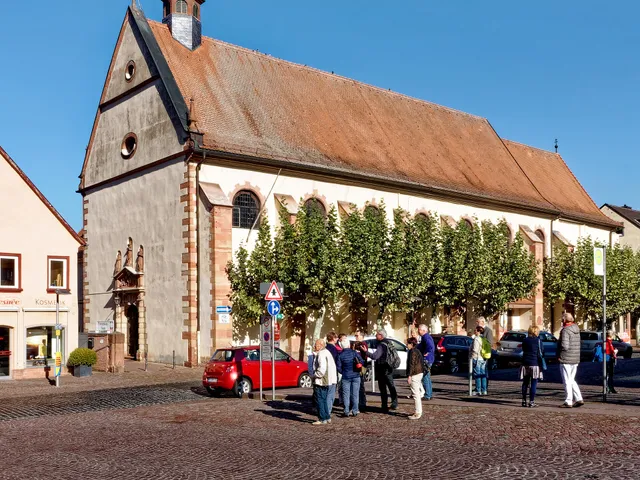
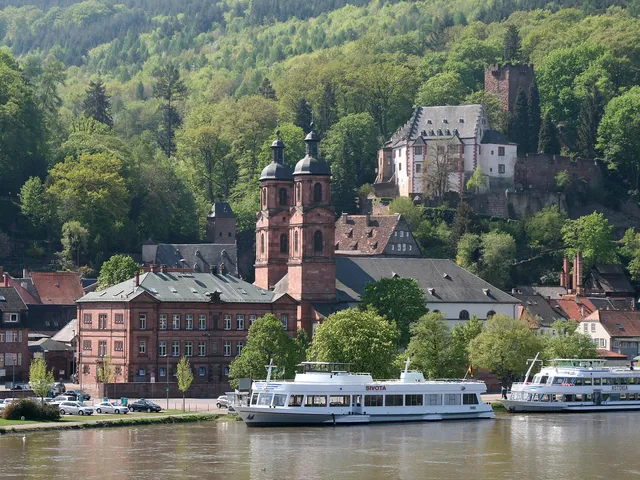
Baroque hall church of Miltenberg's former Franciscan monastery, built from 1667 to designs by Antonio Petrini.
Known locally as the Klosterkirche, the former Franciscan Church of the Immaculate Conception of Mary is a Roman Catholic Baroque church in the town centre of Miltenberg. It belonged to the former Franciscan monastery and was built from 1667 to plans by the architect Antonio Petrini.
Source: Wikipedia
At a Glance
- Construction period
- begun in 1667, nave completed 1679, choir finished and consecrated 1688
- Building type
- plain Baroque hall church with seven bays and a recessed choir, modelled on Gothic mendicant-order churches
- Architect
- Antonio Petrini, of Italian origin, later court architect to the Prince-Bishop of Würzburg
- Location
- in today's town centre, the former outer suburb
- Institution
- former Franciscan monastery (convent founded 1630, dissolved 1983)
- Dedication
- the Immaculate Conception of Mary (since 1843; originally the Assumption of Mary)
- Organ
- surviving case of the Öhninger organ of 1681
- Planned use
- since 2012, considered for use as a columbarium
Monastery and Convent
The Miltenberg Franciscan convent was founded in 1630 and belonged to the Thuringian Franciscan Province. Its first decades were overshadowed by war and plague. After provisional quarters, the monastery with its chapel was built between 1660 and 1662 in what was then the outer suburb and is now the town centre. The 18th century brought a period of flourishing: a monastery garden was laid out in 1730, the convent buildings were extended in 1735, and the friars taught philosophy and theology as well as at the Miltenberg grammar school.
Building the Church
Construction of the monastery church began in 1667. Antonio Petrini, an Italian-born architect who later served as court builder to the Prince-Bishop of Würzburg, provided the plans. The nave was completed in 1679 and the choir followed in 1688; the church was consecrated the same year under the dedication of the Assumption of Mary. By 1705 it had received a rich furnishing, including an organ built in 1681 by P. Adam Öhninger, an organ builder belonging to the convent. In 1707 the previously flat-ceilinged church was given its vault.
Upheavals and Changes
In 1803 the Franciscan monastery was dissolved during secularisation, though the friars retained the right to reside there until their deaths. After Miltenberg passed to Bavaria, the monastery was resettled from 1836 and came under the Bavarian Franciscan Province. In 1843 the convent adopted the dedication to the Immaculate Conception of Mary. Between 1888 and 1893 the Baroque appearance was replaced by furnishings in the taste of the day. The convent was finally dissolved in 1983, and the monastery buildings were taken over by Caritas.
Architecture and Furnishings
The church follows the model of Gothic mendicant-order churches: a plain hall church of seven bays with a two-bay recessed choir and a roof turret instead of a tower. The barrel vault is divided by transverse arches. Between 1960 and 1964 the interior was remodelled and partly restored to a Baroque style, with a new Immaculata high altar in Baroque forms, while the two side altars came from the church in Laudenbach. Of the original furnishings, the figure-rich pulpit and the case of the Öhninger organ survive, the latter later extensively rebuilt by the Vleugels firm.
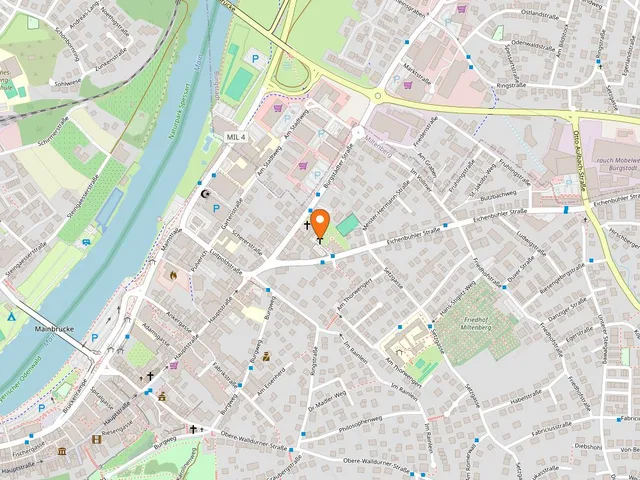
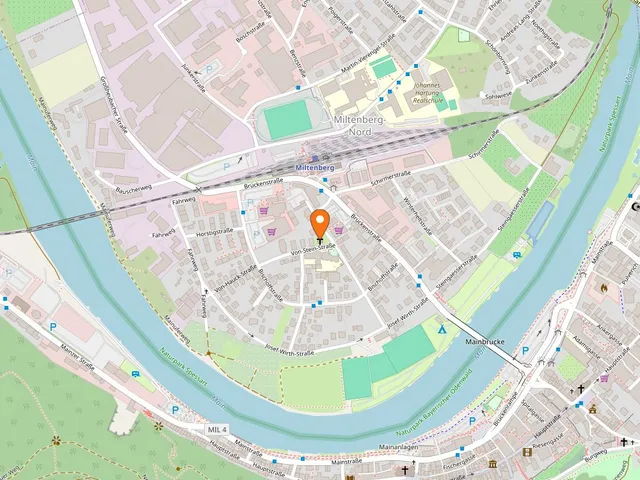
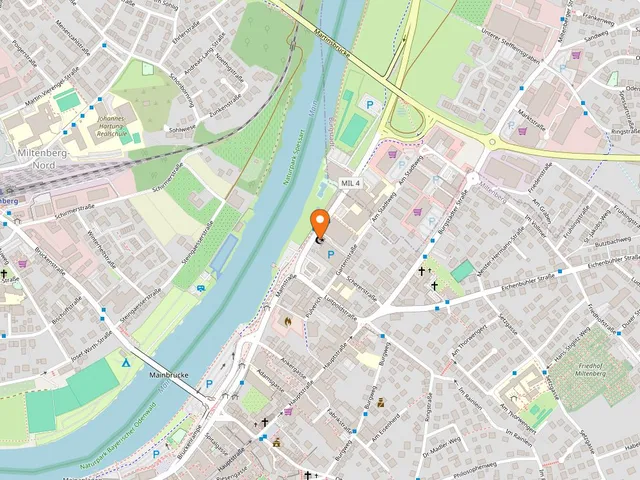
Map
Blue dots: other places nearby — tap to explore.
You might also like — related or nearby
Comments
- Loading comments…
Sources & links
- openstreetmap.org (retrieved 2026-07-13)
- Wikipedia (retrieved 2026-07-14)
Auto-generated, last verified: 2026-07-14
How this page is made
This page draws on open sources — Wikipedia, Wikidata, official websites and the city’s open data. Every statement is checked against the sources linked here, and pages are refreshed regularly.
Spotted a mistake anyway? Tell us below — we read every submission.