Haus Püllen
Wachtendonk's oldest house (around 1634) with a Baroque double gable — today the tourist information office and northern visitor centre of the Maas-Schwalm-Nette Nature Park.
since 1634
With its striking Baroque double gable, Haus Püllen is considered the oldest surviving building in Wachtendonk. It stands in the historic town centre and survived both the great town fire of 1708 and the wars of the following centuries.
At a Glance
- Type
- Historic townhouse, today a visitor centre & tourist office
- Built
- around 1634 — the municipality's oldest building
- Architectural style
- Baroque double gable
- Location
- Historic centre of Wachtendonk
- Heritage status
- Listed monument no. 21 (registered 1984)
Age comparison
Age compared with other places in Wachtendonk.
History
The house was built around 1634 and is named after a former resident family. One anecdote links it to the town fire of 1708: its resident Caspar Lauwart is said to have prayed for his house to be spared and vowed to build a chapel in return — the origin of the later Honnenkapelle.
Today
Since 1997 Haus Püllen has housed the northern visitor centre of the Maas-Schwalm-Nette Nature Park as well as the tourist information office of the municipality of Wachtendonk. A bilingual (German-Dutch) permanent exhibition with interactive models tells the natural and cultural landscape history of the cross-border nature park, from the Ice Age to the present day.
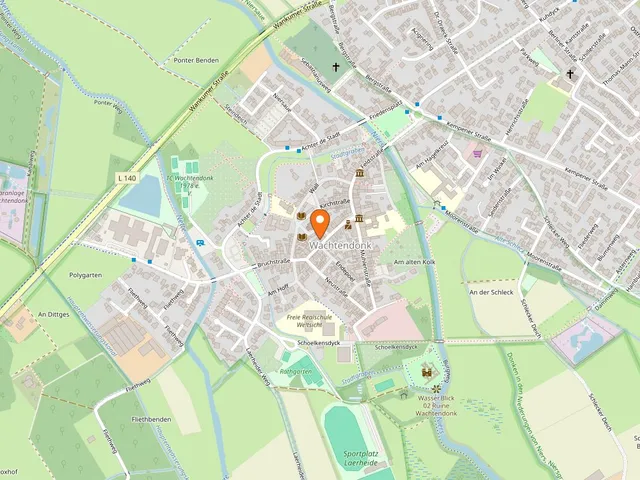
Map
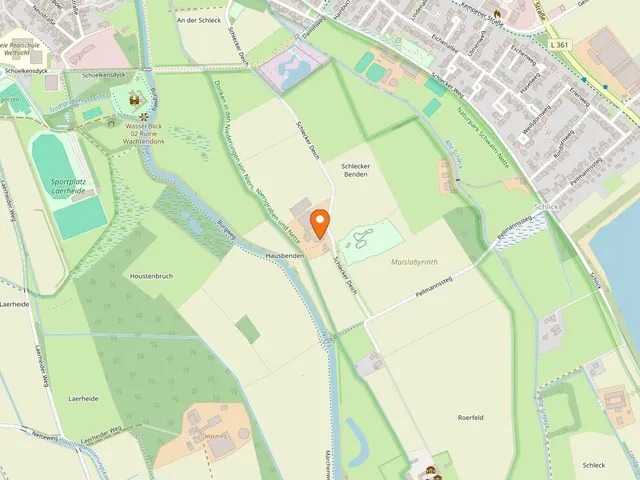
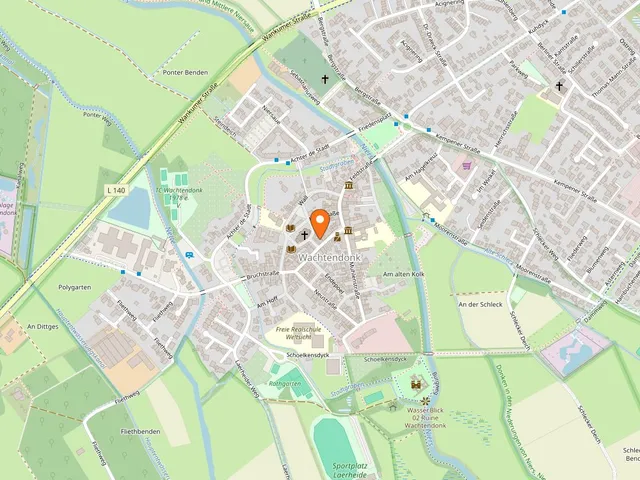
Blue dots: other places nearby — tap to explore.
Address
Feldstraße 35
47669 Wachtendonk
Hours
Di: 09:00–12:30
Di: 13:00–17:00
Mi: 09:00–12:30
Mi: 13:00–17:00
Do: 09:00–12:30
Do: 13:00–17:00
Fr: 09:00–12:30
Fr: 13:00–17:00
Sa: 09:00–12:30
Sa: 13:00–17:00
So: 09:00–12:30
So: 13:00–17:00
You might also like — related or nearby
Comments
- Loading comments…
Sources & links
- Official website
- Official website (retrieved 2026-07-04)
- Official website (retrieved 2026-07-04)
- Wikipedia (retrieved 2026-07-04)
Auto-generated, last verified: 2026-07-04
How this page is made
This page draws on open sources — Wikipedia, Wikidata, official websites and the city’s open data. Every statement is checked against the sources linked here, and pages are refreshed regularly.
Spotted a mistake anyway? Tell us below — we read every submission.