Bremmersbruch Nature Reserve
An around 20-hectare nature reserve designated in 1990, east of the Grefrath-Niershorst airfield.
since 1990
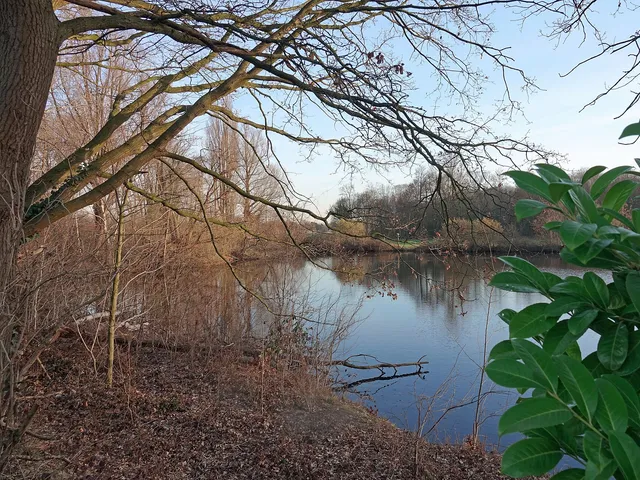
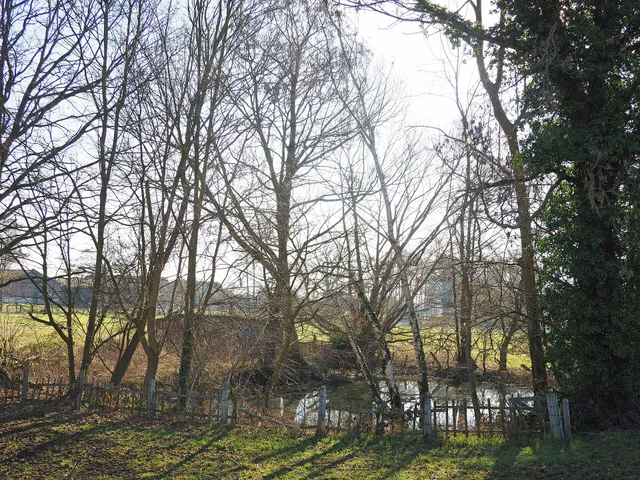
The Bremmersbruch nature reserve extends across the eastern part of Kempen's municipal area and borders the Grefrath-Niershorst airfield. Across a good 20 hectares, old woodland stands interlock with wet grassland and marshy areas to form a finely structured mosaic of habitats.
At a Glance
- Type
- Nature reserve (identifier VIE-033)
- Area
- approximately 20.60 ha
- Protected status
- since 1990 (landscape plan legally binding in 1991)
- Location
- Town of Kempen, east of the Grefrath-Niershorst airfield
- District
- Viersen (Düsseldorf regional government)
- Focus
- old tree stands and waterlogged hollows
Area comparison
Area compared with other Cologne parks and green spaces.
Age comparison
Age compared with other places in Kempen.
Location
The area lies north of the L444 and east of the Schleck in the lowland. Intensively used grassland borders it to the north and west. A farm track crosses the area and ends at the level of a game field. Within the biotope network, the Bremmersbruch serves as a stepping stone and holds both regional and local significance.
Conservation Objective & Habitats
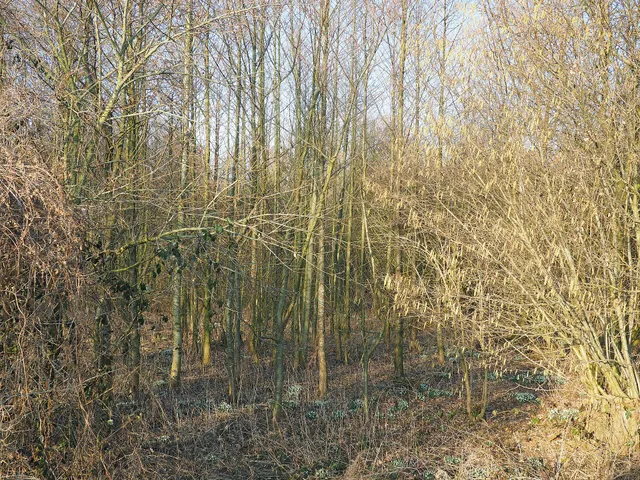
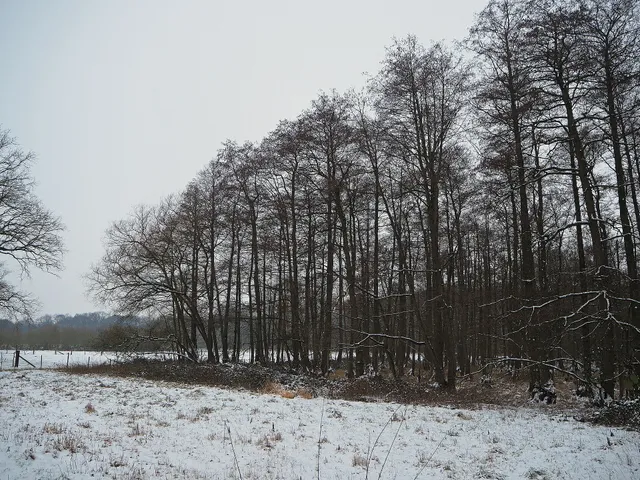
Central to the designation is the high habitat diversity that arises from the alternation of different forest communities, wet grassland areas, and ditches. Near-natural woodland areas – namely oak-beech forest, alder-ash forest, and a relict of an alder-hazel coppice – are to be preserved and restored, among other measures by pushing back non-native woody plants and through near-natural management. A further concern is the survival of the increasingly rare wet habitats as a refuge for species of fresh to moist woodland and grassland sites.
Woodland and Tree Stands
The forest is composed predominantly of pedunculate oak, beech, black alder, ash, and birch of the most varied age classes. Oaks and beeches frequently reach the stage of large timber; individual standards have trunk diameters of over one metre. In the northeast are remnants of a beech coppice-with-standards grown up from overgrown stool shoots. Non-native plantings include hybrid poplars, spruces, and larches. Hazel scrub grows on a parcel "Am Kemper Weg" and is also represented in the herb layer. As deadwood, the old beech stand provides habitats for rare and endangered animal species such as cavity nesters and bats.
Wetland Areas and Landscape
At the centre lies a fallow meadow consisting to a smaller extent of tufted sedge and predominantly of wet grassland. Towards the southwest, the wet area continues as a narrow strip of swamp woodland, fringed by grey willow scrub. It is precisely these waterlogged hollows with their old tree stands that form the ecological heart of the area and account for its special value.
Gallery
Map
Blue dots: other places nearby — tap to explore.
You might also like — related or nearby
Comments
- Loading comments…
Sources & links
- Wikidata (retrieved 2026-07-09)
- Wikipedia (retrieved 2026-07-09)
- nsg.naturschutzinformationen.nrw.de (retrieved 2026-07-10)
Auto-generated, last verified: 2026-07-10
How this page is made
This page draws on open sources — Wikipedia, Wikidata, official websites and the city’s open data. Every statement is checked against the sources linked here, and pages are refreshed regularly.
Spotted a mistake anyway? Tell us below — we read every submission.