Niep Nature Reserve
A roughly 29-hectare nature reserve east of Tönisberg, protected since 1934.
since 1934
The Niep nature reserve lies east of the Kempen district of Tönisberg in the northeast of the Viersen district and follows the course of the canalised Niepkanal up to the district boundary with Wesel.
At a Glance
- Type
- Nature reserve (identifier VIE-024)
- Area
- approximately 29.4 ha
- Protection status
- since 1934 (landscape plan legally binding 1989)
- Location
- east of Tönisberg, town of Kempen
- District
- Viersen (Düsseldorf regional government)
- Defining watercourse
- Niepkanal in the lower terrace channel
- Use
- predominantly grassland (meadows and pastures)
Area comparison
Area compared with other Cologne parks and green spaces.
Age comparison
Age compared with other places in Kempen.
Location and Landscape
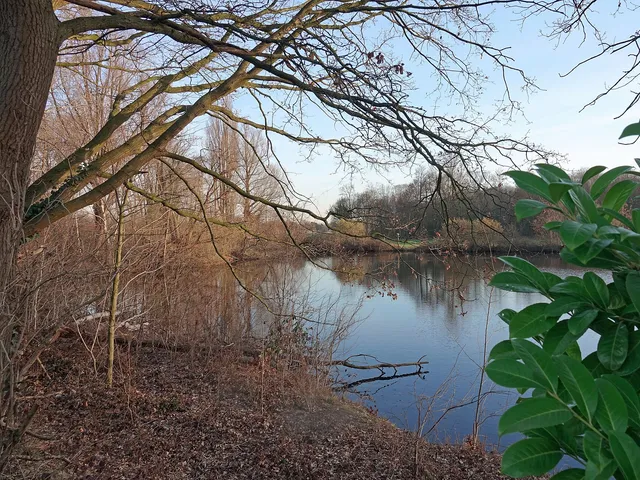
The area follows the lower terrace channel of the Niepkanal along with its terrace edges. The Niep runs northwards through the lowland, is canalised along its entire length and dammed in the southern section. The part protected here belongs to a longer canal system that continues beyond the district boundary as far as Krefeld and into the district of Wesel. Along its course, a chain of ponds, the so-called Kuhlen, lines up one after another – former, man-made peat cuttings that today partly serve as gardens.
Conservation Objective and Biotope Network
The designation is intended to preserve the biological communities tied to nutrient-poor, unpolluted watercourses and their marginal areas, and to maintain the lowland shaped by meadows, pastures and the canal. Through a gradual reduction of economic use, the human-altered valley space is to be developed back into a near-natural habitat. Within the statewide biotope network, the Niep channel holds particular importance: through it, the ecological corridor around the Tönisberg heights closes at the eastern boundary of the district.
Habitats and Vegetation
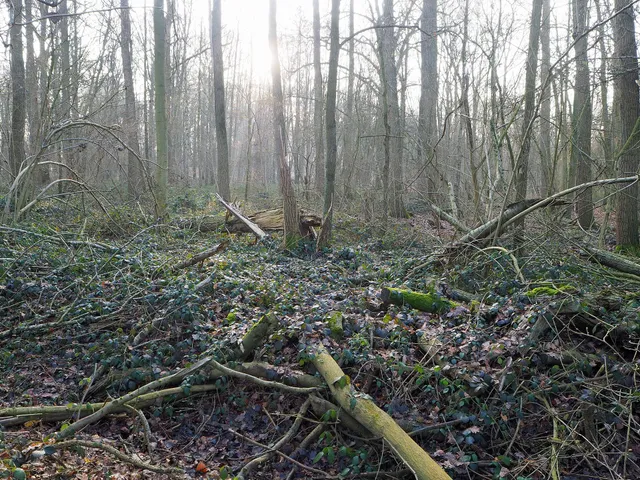
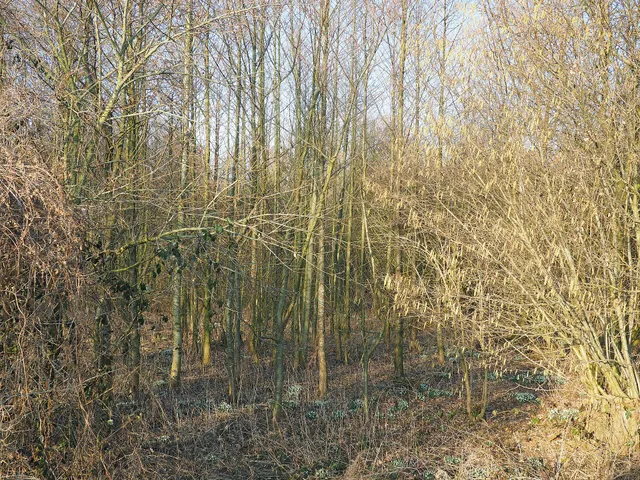
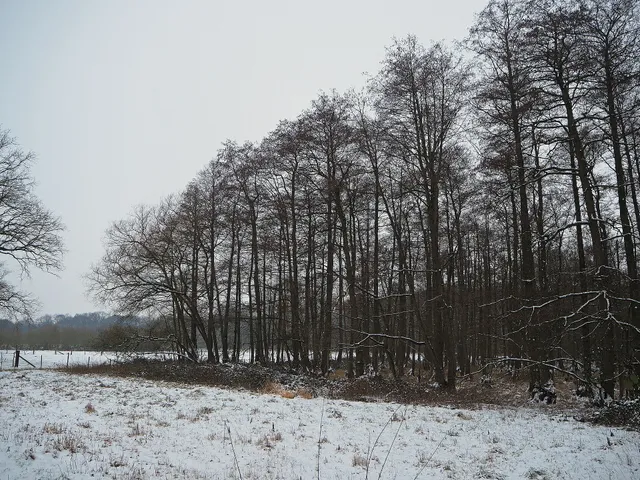
The grassland of the lowland is structured by hedges, groups of trees and individual trees, with mighty old trees still standing in places. Riparian woody vegetation of alders, ashes and willows with interspersed, partly overgrown pollarded trees lines the canal. At Selzer Dyk, flood grassland has established itself in moist hollows. In the north, where the Niepkanal transitions into the Großer Parsick, a sedge-rich silting-up zone with Black alder has developed. The Yellow water-lily (Nuphar lutea) is here – as at the Krickenbeck Lakes – presumably regarded as an autochthonous, originally native species.
Fauna
The near-natural water sections provide habitat for several endangered dragonfly species. Recorded species include the Scarce Chaser (Libellula fulva), the Banded Demoiselle (Calopteryx splendens) and the Western Clubtail (Gomphus pulchellus).
Map
Blue dots: other places nearby — tap to explore.
Address
Achterberg
47906 Kempen
Hours
So: 00:00–24:00
You might also like — related or nearby
Comments
- Loading comments…
Sources & links
- Wikidata (retrieved 2026-07-09)
- Wikipedia (retrieved 2026-07-09)
- nsg.naturschutzinformationen.nrw.de (retrieved 2026-07-10)
Auto-generated, last verified: 2026-07-10
How this page is made
This page draws on open sources — Wikipedia, Wikidata, official websites and the city’s open data. Every statement is checked against the sources linked here, and pages are refreshed regularly.
Spotted a mistake anyway? Tell us below — we read every submission.