Heune Column
On the riverside promenade stands one of the last Heune columns – a multi-ton sandstone monolith cut near Miltenberg in the 11th century for Mainz Cathedral, yet never used.
On the riverside promenade in Miltenberg lies a Heune column (Heunesäule) – a massive round sandstone support that was prefabricated almost a thousand years ago for the rebuilding of Mainz Cathedral, but then never used.
Source: Wikipedia
At a Glance
- Type
- round support (monolith) of sandstone
- Origin period
- probably 11th century
- Source
- quarry on the Bullauer Berg near Miltenberg
- Original purpose
- support for rebuilding the Willigis Cathedral of Mainz, which burned down in 1009
- Location
- riverside promenade in Miltenberg (Bavaria)
- Surviving pieces
- reportedly once 42, still 14 in the 18th century, around eight known by 1960
A component that was never installed
In 1009 the cathedral of Mainz, erected by Archbishop Willigis, burned down. Even before the rebuilding contract had been awarded, round supports were already being finished in the 11th century – out of anticipatory business acumen – in a quarry on the Bullauer Berg near Miltenberg. The builder, however, opted for other supports, so the prefabricated columns were never needed.
From 42 down to a handful
According to tradition there were once 42 of these columns. By the 18th century 14 were still known, and around 1960 only eight remained. The surviving examples are spread across several locations.
The Miltenberg column
One of these pieces stayed in Miltenberg itself and stands on the riverside promenade of the Bavarian town – not far from the area where the columns were once quarried from the rock.
Where the other columns stand
The best-known Heune column stands as a monument on the market square in Mainz: for the 1,000th anniversary of the cathedral's construction in 1975, the town of Miltenberg donated it to the cathedral city. It weighs 16 tonnes, is 6.40 metres tall and 1.20 metres in diameter; the Palatine sculptor Gernot Rumpf set it on a bronze base depicting various head coverings from Mainz's history. Another example was handed to the Bavarian National Museum in 1879 and transported to Munich by rail in June 1880 – a highly laborious undertaking; since 1975 the monolith, 749 centimetres high, 14.5 tonnes in weight and with a mean diameter of 105 centimetres, has stood in front of the Archaeological State Collection. A third column reached the Germanic National Museum in Nuremberg by rail on 31 May 1880; it is 7.61 metres long, roughly one metre in diameter and weighs about 14.45 tonnes. Around 1972 it was moved to its present location.
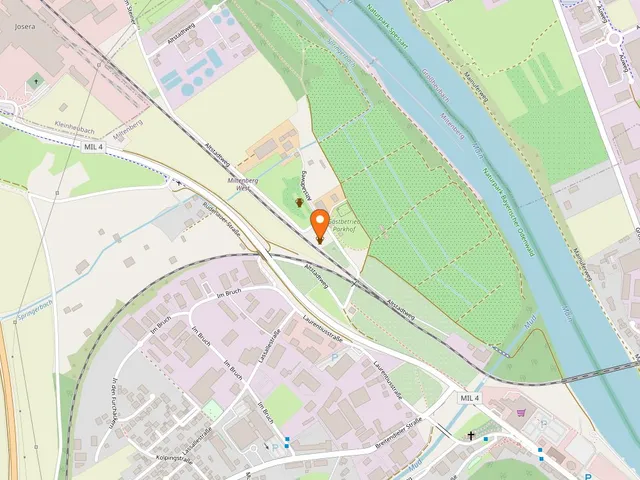
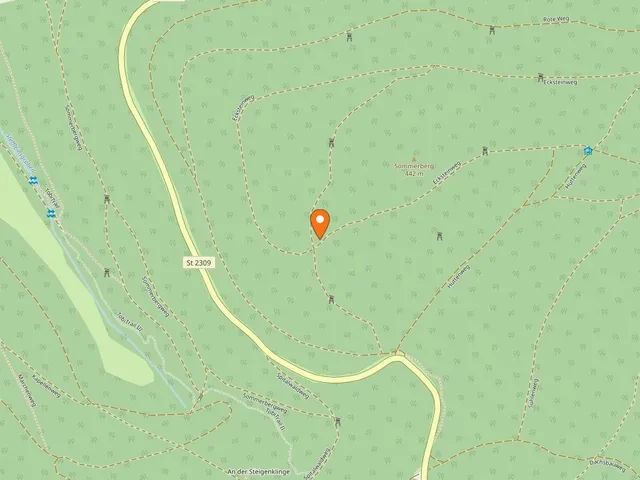
Map
Blue dots: other places nearby — tap to explore.
You might also like — related or nearby
Comments
- Loading comments…
Sources & links
- openstreetmap.org (retrieved 2026-07-13)
- Wikipedia (retrieved 2026-07-14)
Auto-generated, last verified: 2026-07-14
How this page is made
This page draws on open sources — Wikipedia, Wikidata, official websites and the city’s open data. Every statement is checked against the sources linked here, and pages are refreshed regularly.
Spotted a mistake anyway? Tell us below — we read every submission.